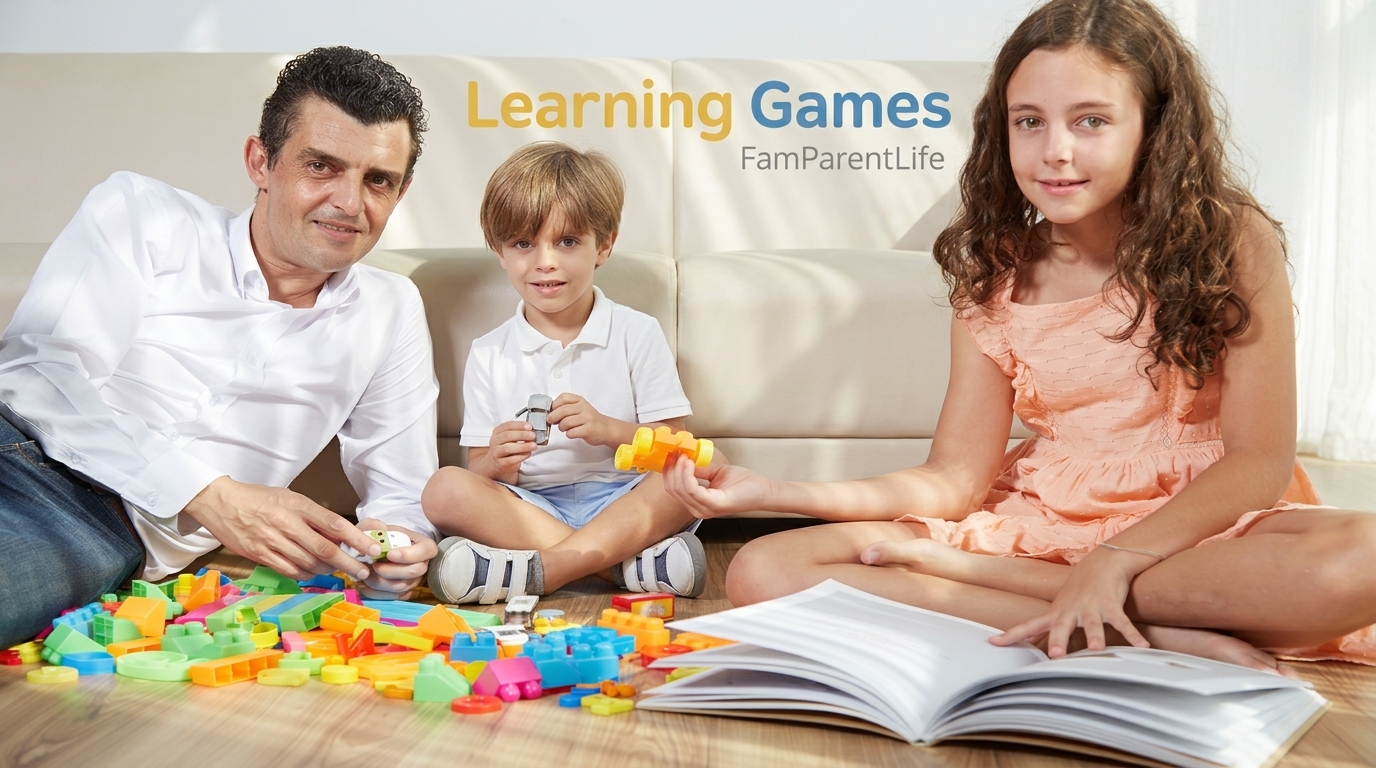
Learning games from FamParentLife turn everyday family moments into playful lessons. These games build reading, math, and thinking skills while kids have fun — no screens required. Here is the complete guide for parents, teachers, and caregivers.
Kids learn best when they’re laughing. That’s not a parenting myth. It’s brain science. When play feels like play, children stay curious, focused, and hungry for more. This guide shows you exactly which games work, at every age, for every skill.
What Are Learning Games FamParentLife?
Learning games FamParentLife are educational activities rooted in the FamParentLife approach — a family-first philosophy that blends intentional parenting, deep family connection, and playful learning. The name comes from a growing family and parenting blog brand that covers parenting tips, family life, wellness, learning activities, and educational games for kids FamParentLife.us.
The core idea is simple: you don’t need a classroom to teach a child. A kitchen, a living room, or a car ride can become a learning space. Simple cards, puzzles, drawing activities, word challenges, and counting games turn ordinary moments into useful learning experiences BookVibe.
So when parents search for “learning games famparentlife,” they’re looking for one thing: fun ways to make learning stick — without bribes, boredom, or battles.
Why Learning Games Beat Worksheets Every Time
Research is clear on this. Play isn’t the opposite of learning. It is learning.
A 2026 study on play-based learning found that purposeful play significantly boosts cognitive development, executive function, and motor skills in young children. Play lets children use their senses, explore, and think creatively — the exact skills worksheets can’t teach ChildCare.gov.
The screen-time warning matters too. Excessive screen time is linked to poor sleep, behavioral issues, and weaker development. Games you play together — off-screen — build the self-regulation and focus that apps often erode.
The verdict: hands-on games deliver more learning per minute than passive screen time. And they build something else: family memories.
Best Learning Games by Age
Not every game fits every child. Here’s a fast, age-sorted cheat sheet based on what actually works with real families: Treehouse Schoolhouse and A Fine Parent.
Rule of thumb: pick games slightly above their level, but not frustratingly hard. The sweet spot is where kids stretch — and still win sometimes.
Learning Games That Build Specific Skills
Want a specific outcome? Match the game to the skill. This table makes it easy.
Pro tip: one game often builds several skills at once. That’s the magic. A simple card game can teach counting, patience, and losing gracefully — all in one sitting.
Screen-Free vs. Screen-Based: The Smart Mix
You don’t have to ban screens. You have to choose them wisely.
-
Screen-free games first. These build the deepest skills — motor control, social cues, and self-regulation.
-
Screen time with a purpose. Quality educational apps can help — but only with limits and co-viewing ChildMind.
-
Follow the 20-minute rule. Short, focused sessions beat long, passive ones.
-
Watch together. When you play alongside your child, learning outcomes improve measurably.
The balance: aim for mostly hands-on play, with screens as a treat — not a default babysitter.
10 Quick Learning Games With Zero Supplies
No board games? No problem. These work anywhere — kitchen, car, or waiting room.
-
I Spy — builds vocabulary and observation.
-
20 Questions — teaches logic and categorization.
-
Counting Walk — count red cars, birds, or steps.
-
Alphabet Hunt — Search for objects that begin with every letter of the alphabet.
-
Story Round-Robin — each person adds one sentence.
-
Simon Says — sharpens listening and self-control.
-
Memory Match — use household objects, not cards.
-
Rhyme Time — call out a word, child rhymes it.
-
Shadow Shapes — use a flashlight to make animals.
-
Emotion Charades — act out feelings, guess the mood.
How to Make Learning Games a Family Habit
The most enjoyable game is the one you genuinely take the time to play.
Here’s how to make it stick.
-
Keep it short. Ten focused minutes beat an hour of drift.
-
Schedule it. A “game after dinner” routine beats hoping for spare time.
-
Let kids choose. Ownership boosts engagement instantly.
-
Lose gracefully. Model good sportsmanship — it teaches more than winning.
-
Rotate games. Freshness keeps curiosity alive.
Consistency beats intensity. A little play, every day, compounds into real skill growth.
Quick Summary Table
Key Takeaways
-
Learning through play is science-backed. It builds cognitive skills worksheets can’t.
-
Age matters. Match the game to the child’s stage for the best results.
-
One game, many skills. Play teaches thinking, motor, and social skills at once.
-
Balance screens. Hands-on play first; screens in short, shared doses.
-
Start small. Ten minutes a day beats a perfect plan you never start.
FAQ: Learning Games Questions Parents Actually Ask
What does “famparentlife” mean?
It’s a family and parenting blog brand focused on intentional parenting, family connection, and playful learning — including educational games and activities for kids at FamParentLife.us.
What are the best learning games for a 4-year-old?
Turn-taking games like Sneaky Snacky Squirrel, letter games like Sequence Letters, and simple counting games like Sum Swamp work beautifully at this age Treehouse Schoolhouse.
Can learning games really improve my child’s brain development?
Yes. Research shows purposeful play strengthens executive function, motor skills, and cognitive growth in early childhood Aisyah et al..
How much screen time is okay for educational games?
Short, focused, co-viewed sessions are fine. Excessive passive screen time is linked to sleep and behavior problems Muppalla et al.
What are good learning games for the car?
I Spy, 20 Questions, counting walks, and story round-robin — all zero-supply and screen-free.
How do I make my child actually want to learn?
Let them choose the game, keep sessions short, celebrate effort, and model losing gracefully. Fun first, learning follows.
Are board games better than apps for learning?
For most skills, yes. Board and card games build social cues, patience, and motor skills that screens can’t replicate A Fine Parent.
Final thought
Learning games for parents aren’t about forcing education into playtime. They’re about remembering that play is education. Pick one game tonight. Play it with your kid. Watch the learning happen — disguised as fun.
Click here for more details.