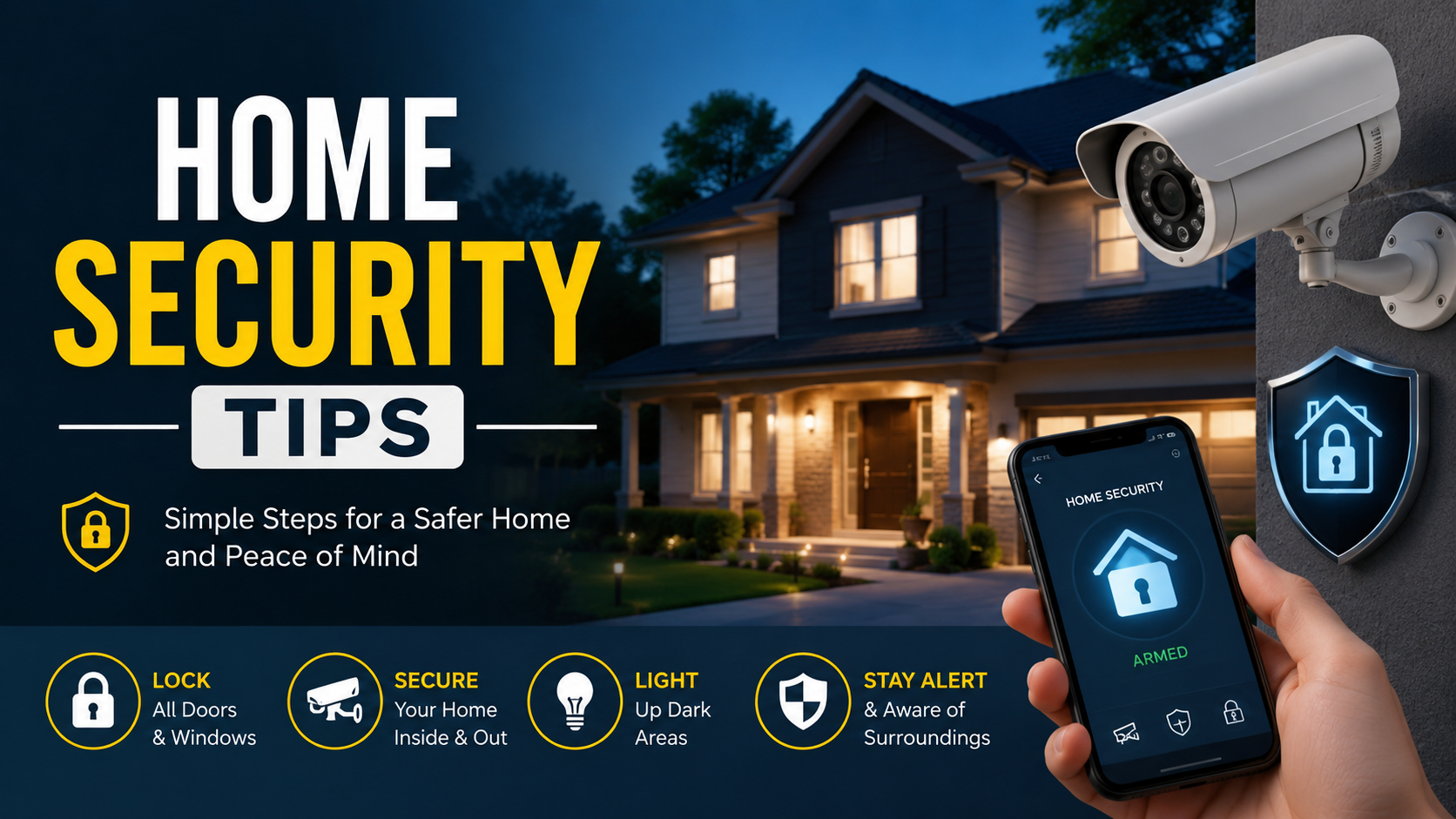
Effective property protection relies on straightforward habits: securing entry points, enhancing outdoor visibility, installing conspicuous surveillance systems, maintaining strict locking routines, and establishing a household emergency plan. Do those well, and you lower risk fast.
A safer home is rarely about one gadget. It’s about layers. Strong entry points. Good habits. Smart visibility. And a plan your whole household can follow.
Quick Summary: Best Home Security Measures at a Glance
|
Security Move |
Why It Matters | Cost Level | Priority |
|
Install deadbolts on exterior doors |
Makes forced entry harder |
$$ |
High |
|
Add motion-sensor lights |
Removes hiding spots |
−$ |
High |
|
Lock windows and sliding doors |
Blocks common entry points |
$ |
High |
|
Use visible cameras or doorbells |
Increases deterrence |
−$ |
High |
|
Reinforce strike plates and hinges |
Strengthens weak door frames |
−$ |
High |
|
Trim shrubs near windows |
Improves sightlines |
$ |
Medium |
|
Secure Wi-Fi and smart devices |
Prevents digital break-ins |
$ |
High |
|
Add smoke and CO alarms |
Protects the family home safety |
−$ |
High |
|
Create a fire escape and emergency plan |
Speeds response in emergencies |
$ |
High |
| Use light timers when away | Makes the home look occupied | $ |
Medium |
Key Takeaways
- Start with doors, windows, and lighting.
- Visible deterrents often stop trouble before it starts.
- Smart home security only works if your network is secure.
- Family home safety includes burglary prevention, fire safety, and CO protection.
- A solid home security checklist beats random upgrades.
Home Security Tips That Make the Biggest Difference
If you want the fastest win, focus on the places an intruder sees first. That means your front door, first-floor windows, side gates, garage access, and dark exterior corners.
Think in three layers:
- Deter with lights, cameras, signs, and visibility.
- Delay with strong locks, reinforced doors, and secured windows.
- Respond with alarms, alerts, and a family plan.
That layered approach is what turns basic home protection tips into real-world security.
Start With Your Front Door Security Tips
Your front door is your home’s handshake. It should also be your strongest barrier.
The National Crime Prevention Council recommends sturdy metal or solid wood exterior doors, properly secured sliding doors, and well-made deadbolt locks with at least a 1.5-inch throw. It also suggests wide-angle viewers and strong lighting near entry doors.
1. Upgrade to a solid-core or metal exterior door
Hollow doors are easy to kick in. A stronger door raises the effort and noise needed to get through.
2. Install a quality deadbolt
A locking knob alone is not enough. Add a single-cylinder deadbolt on each exterior door.
3. Reinforce the frame, not just the lock
Many break-ins happen because the doorjamb fails. Use longer screws, a reinforced strike plate, and stronger hinge screws.
4. Add a peephole or smart video doorbell
You should always know who is outside before opening. These precautions are particularly vital for households that include children or elderly family members.
5. Stop hiding spare keys outside
Under the mat is not clever. Neither is the planter, mailbox, or fake rock. The DOJ safety guidance explicitly warns against hidden outdoor spare keys.
6. Use a door brace or security bar
This is one of the easiest DIY home security tips. It adds resistance at night or when you’re home alone.
Window Security Tips Burglars Notice First
Windows are often the forgotten weak spot. Especially on the ground floor.
7. Lock every window every day
This sounds obvious. It still gets missed. Make window locking part of your nightly routine.
8. Add secondary window stops
They limit how far a window opens. That helps with both security and child safety.
9. Use security film on vulnerable glass
Film does not make glass unbreakable. It does make it slower and louder to breach.
10. Secure sliding doors
Sliding glass doors need more than the factory latch. Use a bar, pin lock, or rod in the track.
11. Keep valuables out of the street view
Don’t advertise laptops, jewelry, gaming consoles, or packaging for expensive purchases.
These are simple window security tips, but they matter because burglars often choose the easiest entry, not the fanciest one.
Outdoor Home Security Ideas That Deter Crime
A secure home should look unattractive to a target.
The DOJ guidance recommends trimming shrubs and trees that create hiding spots or access to second stories, plus keeping entry areas well lit with motion detectors or floodlights.
12. Install motion-sensor lighting
Light changes behavior. Dark corners invite lingering. Bright entries encourage people to move on.
13. Trim landscaping near doors and windows
Overgrown hedges are great for privacy. They can also hide intruders. Keep a balance.
14. Make your house number visible
Emergency responders should be able to find you fast. In situations such as a burglary, fire, or medical emergency, every second counts, making quick access essential.
15. Use visible cameras and alarm signage
Even budget cameras can shift the risk calculation for a would-be intruder. Visibility matters as much as recording.
16. Make the home look occupied when away
Use timers on lights. Pause deliveries. Ask a trusted neighbor to collect packages or park in your driveway when you travel.
These effective home security strategies raise the level of difficulty, uncertainty, and visibility for anyone attempting to target your home. Visit details about Lowe’s Home Improvement Roseville for more informations.
Smart Home Security Without Creating Digital Risk
A smart lock is only smart if your network is secure.
The FTC recommends securing your home network with a strong router password, turning on the router firewall, keeping router software updated, and using WPA3 or WPA2 encryption. It also advises putting cameras on a separate network when possible.
17. Change every default password
Default passwords are low-hanging fruit.
18. Turn on two-factor authentication
If your camera or cloud storage offers 2FA, enable it. It adds a critical layer.
19. Keep camera apps and firmware updated
The FTC and NCSC both advise regular updates because they patch security flaws and bugs.
20. Use WPA3 or WPA2 encryption on Wi-Fi
Older standards like WEP and WPA are outdated. WPA3 is best when available.
21. Disable features you don’t need
The FTC advises turning off remote management, WPS, and UPnP on routers if you do not need them. The NCSC also suggests disabling remote viewing on smart cameras if that feature isn’t necessary.
Bonus: Place cameras with privacy in mind
The NCSC warns that internet-connected cameras can expose private areas if poorly secured. Avoid pointing cameras at bedrooms or sensitive indoor spaces unless truly necessary.
That’s the heart of smart home security in 2026: physical safety plus cyber hygiene.
DIY Home Security Tips and Home Security on a Budget
You do not need a luxury system to make your home safer.
Here are simple home security tips that are cheap and effective:
- Replace short hinge screws with 3-inch screws
- Add window dowels or sliding door bars
- Install motion lights
- Put lights on timers
- Add a peephole
- Use visible alarm stickers
- Trim shrubs
- Secure Wi-Fi passwords
- Create a family emergency contact sheet
If you’re looking for home security on a budget, spend first on locks, lighting, and habits. Fancy tech can wait.
Apartment Security Tips for Renters and Families
Renters need security too. You just need upgrades that are effective and lease-friendly.
Best apartment security tips
- Check every door and window lock on move-in day
- Ask management about rekeying or lock changes
- Use a door jammer, portable lock, or security bar
- Add peel-and-stick contact sensors if allowed
- Keep curtains closed at night on first-floor units
- Do not buzz in strangers
- Pick up packages quickly
For families, create clear rules for answering the door. The DOJ recommends making sure everyone in the home, including children and teens, understands house rules for answering the phone and the door.
These apartment security tips help because apartments often have more shared access points, more foot traffic, and less control over building-wide security.
Home Safety Tips Beyond Break-Ins
Real family home safety goes beyond burglary prevention.
A complete home safety checklist should also cover fire, carbon monoxide, and emergency communication.
Ready.gov advises having smoke alarms on every level of the home and in each bedroom, making a written fire escape plan, learning two ways out of every room, choosing a safe outdoor meeting place, and practicing home fire drills at least twice a year.
The CPSC recommends CO alarms on every level and outside sleeping areas, with battery backup where possible, and warns never to run portable generators inside homes or garages.
Ready.gov also recommends a family emergency plan that covers alerts, shelter, evacuation routes, communication, pets, medications, and household-specific needs.
Your home safety essentials should include:
- Smoke alarms
- CO alarms
- Fire extinguisher
- First-aid kit
- Emergency contacts
- Flashlights
- Medication list
- Pet plan
- Escape ladder for upper floors if needed
That mix of home security essentials and emergency planning gives you fuller protection.
Home Security Checklist
Here’s a practical home security checklist you can actually use.
Daily home security checklist
- Lock all exterior doors
- Lock all accessible windows
- Turn on outdoor lighting
- Check the garage door
- Bring in packages
- Arm the alarm
- Close blinds where valuables are visible
Weekly home safety checklist
- Test camera views
- Check smart lock batteries
- Inspect motion lights
- Walk the property at night
- Review family routines
- Clear hiding spots in the yard
Monthly home security measures
- Test smoke alarms
- Test CO alarms
- Update smart device apps
- Review camera permissions
- Change weak or reused passwords
- Check door frames and strike plates
Before vacation
- Pause mail or deliveries
- Put lights on timers
- Tell one trusted neighbor
- Avoid posting live travel updates
- Lock gates, sheds, and garages
- Store ladders and tools away
Common Home Security Mistakes
Even good systems fail when habits fail.
Watch for these mistakes:
- Hiding a spare key outside
- Forgetting the garage side door
- Leaving ladders visible
- Using the same password everywhere
- Ignoring firmware updates
- Letting shrubs block windows
- Pointing cameras poorly
- Assuming “safe neighborhood” means zero risk
- Never practicing emergency plans
The goal is not paranoia. It’s predictability. Safe homes run on repeatable habits.
Final Thoughts: How to Secure Your Home Without Overcomplicating It
If you’re wondering how to secure your home, start small and start today.
Reinforce your front door. Lock windows. Add lighting. Secure your Wi-Fi. Build a family plan. Those ways to protect your home are practical, affordable, and effective because they address both everyday crime risk and household emergencies.
The best home burglary prevention plan is not one expensive purchase. It’s a system of smart choices that work together.
FAQ: Home Security for Families, Renters, and Homeowners
What are the most important home security tips for beginners?
Start with the basics: strong deadbolts, locked windows, motion lights, visible cameras, and a consistent nightly lock-up routine. Then add smoke alarms, CO alarms, and a family emergency plan.
How can I improve home security on a budget?
Focus on low-cost, high-impact fixes. Reinforce strike plates, use longer screws, add sliding door bars, install motion lights, and secure your Wi-Fi and smart devices.
What are the best apartment security tips for renters?
Use portable door braces, confirm locks work properly, keep blinds closed at night, avoid buzzing in strangers, and add renter-friendly contact sensors if allowed.
Do security cameras really help prevent burglary?
Visible cameras can act as a deterrent because they increase the chance of being seen, identified, or recorded. They work best when combined with lighting, strong locks, and clear sightlines.
What is the safest way to secure a front door?
Use a solid-core or metal door, a quality deadbolt, reinforced strike plates, long screws in hinges, bright lighting, and either a peephole or video doorbell.
How do I secure smart home devices?
Change default passwords, turn on 2FA, use WPA3 or WPA2 Wi-Fi encryption, update firmware, and disable features like remote management or UPnP if you do not need them.
What should a family home safety plan include?
It should include emergency contacts, a meeting place, evacuation routes, pet planning, medication needs, smoke and CO alarm checks, and a fire escape drill schedule.
For more information Click here.